

3 Easy Ways To Create Stellar Content For Ecommerce Stores
3 Easy Ways To Create Stellar Content For Ecommerce Stores
Three simple content must-haves to create a more engaging and satisfying experience for your customers.
As technology is advancing, more and more people are spending time online; either performing work tasks, communicating with friends, or online shopping. There couldn’t be a better time for eCommerce stores to make a debut and build a strong online presence by creating an engaging and satisfying customer experience through content.
Throughout this blog post, we’ll explore 3 easy ways to create stellar content for eCommerce stores

Have you ever dove deep into considering what the word content truly conveys?
The word content has two definitions that can potentially be intertwined. One of them refers to a state of being satisfied and the other refers to something that is being expressed. So how can the two definitions of content be intertwined? Well, In ecommerce, content refers to the information, tools and experiences used to target a customer and make them satisfied (content). Ultimately, you provide them content to make them content. These 3 simple must-have content integrations have the ability to provide a more engaging and satisfying experience for your customers.
1. Product Demos Powered by Videos
Product demos are an effective way of showing your customers that you care about them. Rather than only describing and displaying images of the product, you’re providing a real world example of using the product or service through the power of video content.

When customers are browsing through items and are considering potentially buying something, they want to witness how they can use products in their day-to-day life. Sometimes images and descriptions don’t quite cut it. A product demo conveys a deeper understanding of the product and has the ability to provide that little push that can convince a customer to purchase that item.
Product Demo video examples:
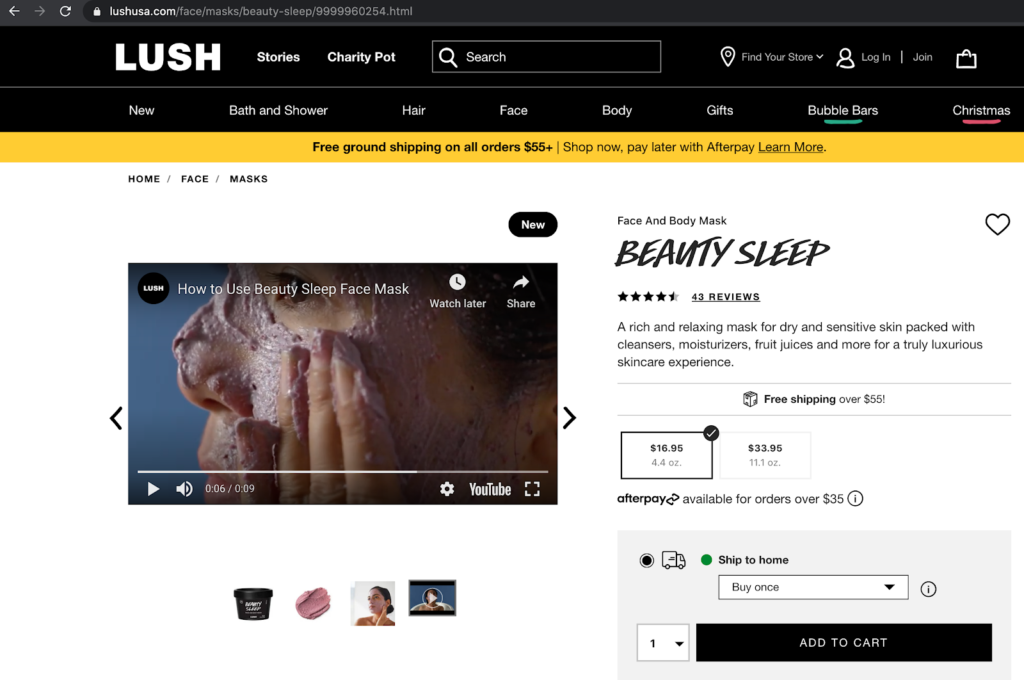
Lush is a cosmetics brand that is acknowledged for their interactive store layout. When entering a Lush brick & mortar store, you are surrounded with a variety of products, smells, associates and sinks. The sinks are there for associates to demonstrate the products on customers, which may sound slightly odd, but Lush thrives off this demonstration based in-store experience. Although customers can’t exactly experience this online; Lush’s online site provides extremely detailed descriptions regarding scents, textures, skin types and how-to video demonstrations. This 9 second demonstration video shows not only how to apply the product on your face, but also reveals the texture of the face mask between your fingertips and on your skin.
Dyson is another brand that brings awareness to their products through demonstrations. Not only does Dyson create demo stores for people to understand and experience their state-of-the art technology, their online store also succeeds in doing so. Their online store provides several different demos on methods of how/why to use their products, and the outcome of using those products. These three videos show different ways to use the Dyson Carrale straightener depending on the look you’re going for; an amazing example of how Dyson conveys the value of their products through product demos.

Now that you have witnessed the potential impact of product demos, think about how your brand can thoroughly convey the value of your products or service using product demonstration videos to optimize the content on your ecommerce store.
2. Social Media Storytelling
Social media is easily one of the most popular online activities; over 3.6 billion people worldwide are using social media in 2020 and that number is constantly growing. With that being said, social media is a great way for brands to achieve an online presence. Social media content for your brand isn’t geared towards promoting your products but rather presenting the value and story around your products. If your social media platforms display content that is intriguing and enlightening, providing more of an experience rather than a sales promotion; you are making users feel like they are a part of something more. Proper engagement on social media can lead to multiple new opportunities for your brand; you know your brand has amazing products, so convey that value through your social media. Each social media platform is tailored towards a specific audience; giving your brand the ability to utilize each platform to its extent and convey multiple aptitudes of content. Posting different content on differing social media platforms can even boost engagement and broaden your audience. When utilizing social media platforms and displaying unique content, you are granting the ability to achieve and maintain a large following, giving your followers something to look forward to. Either being someone who is a new follower or a potential one; you have something to offer them that goes beyond your products.

Great Social Media Engagement Examples:
Lululemon is a retailer that makes athletic clothing for yoga, running, lifting weights and most all other sweaty activities. Although Lululemon is known for their top-shelf athletic apparel, they have much more to offer than leggings and running shorts on their social media platforms. The brand is active in interacting with their users on Facebook, Instagram, YouTube,Twitter and Pinterest; using each platform to convey content in a different way. Not only do they promote products on these platforms, Lululemon also provides content that any social media user can benefit from such as yoga sessions, meditations and workouts. This conveys Lululemon’s core value behind their products; a healthy lifestyle.
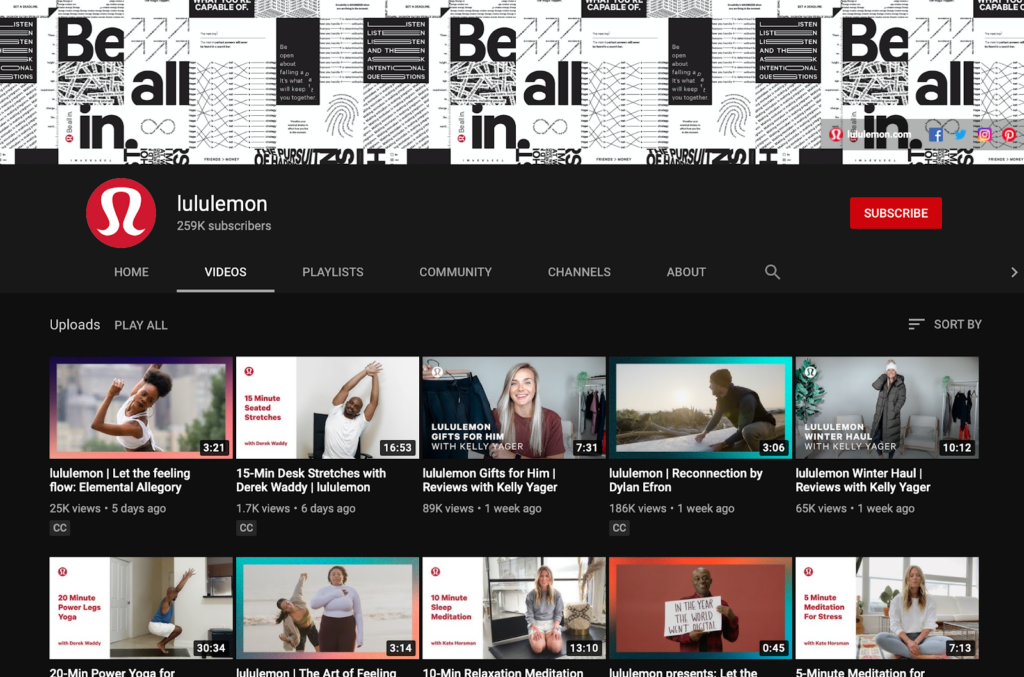
On Lululemon’s YouTube platform you can find a variety of videos ranging from running training and meditation sessions, to best-selling product hauls and lululemon gifts for him.
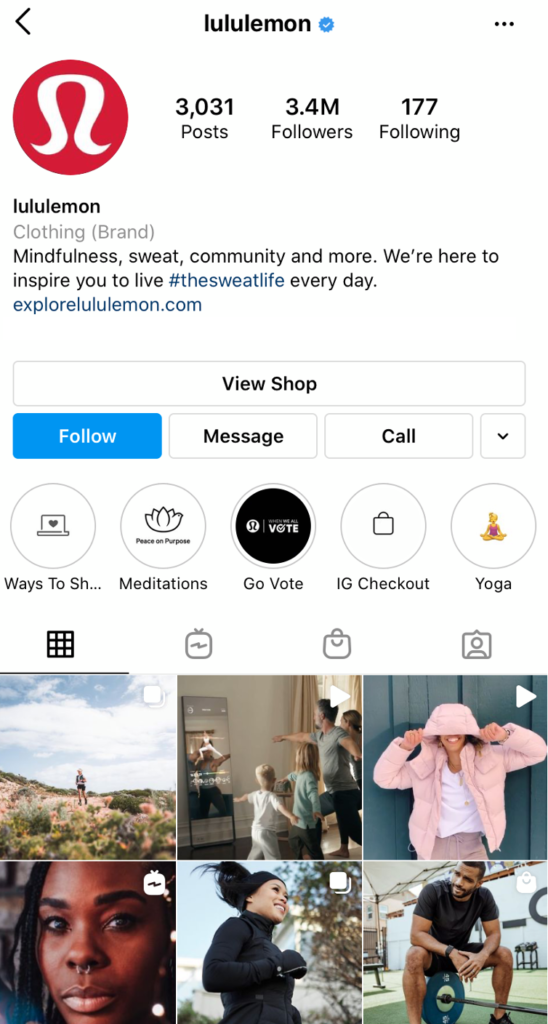
On Instagram, Lululemon showcases the diversity of customers and different everyday lifestyle uses of their products using high-quality images and short videos.
They provide story highlights, giving advice not only on wellness activities like meditation, but also on happenings in the world. For example, a story dedicated to voting, reminding people to vote in the election and even attaching a link for users to check their voter registration status.
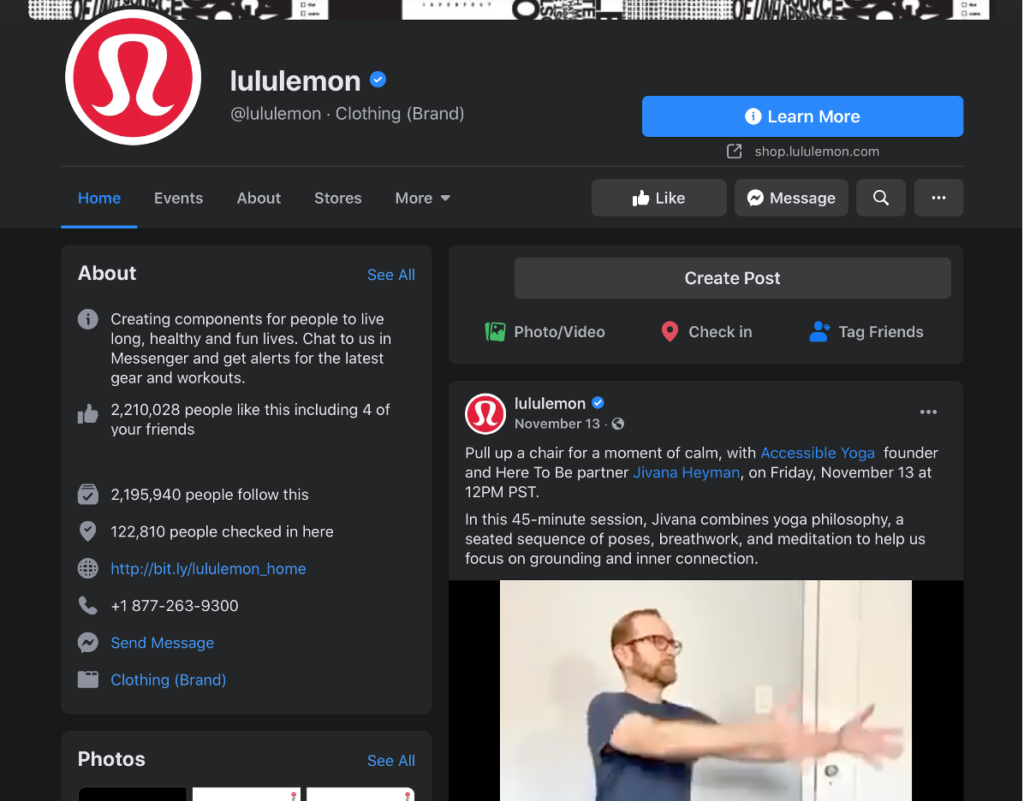
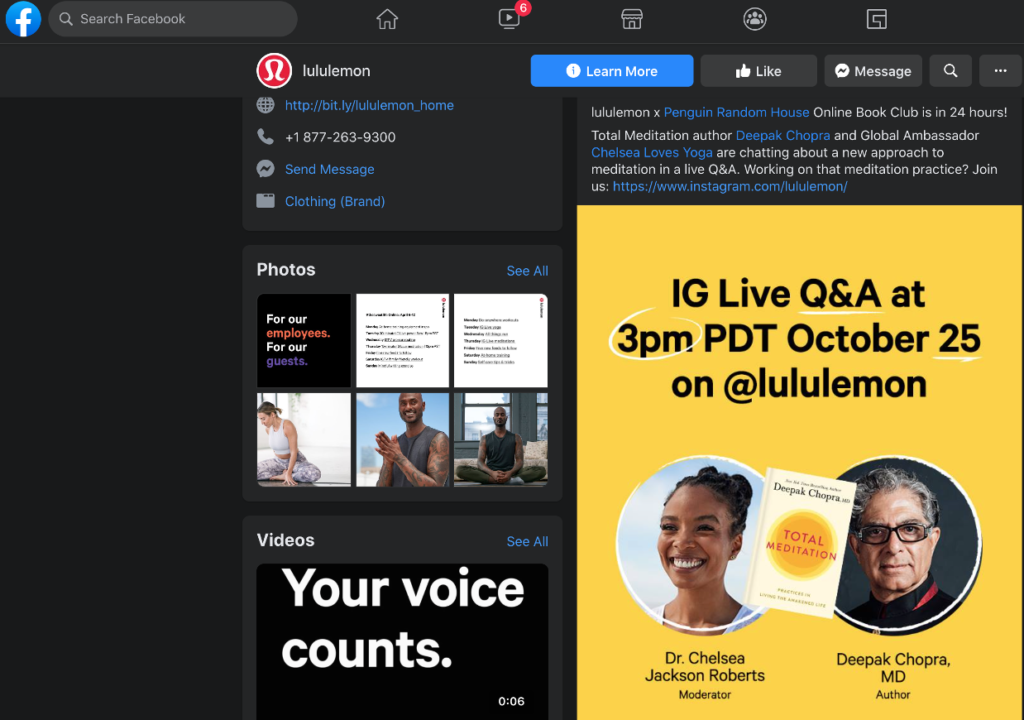
On Facebook, Lululemons content is more textual and community-like, aiming to bring their customers together. For example, posting and encouraging followers to join a meditation session or an online book club.
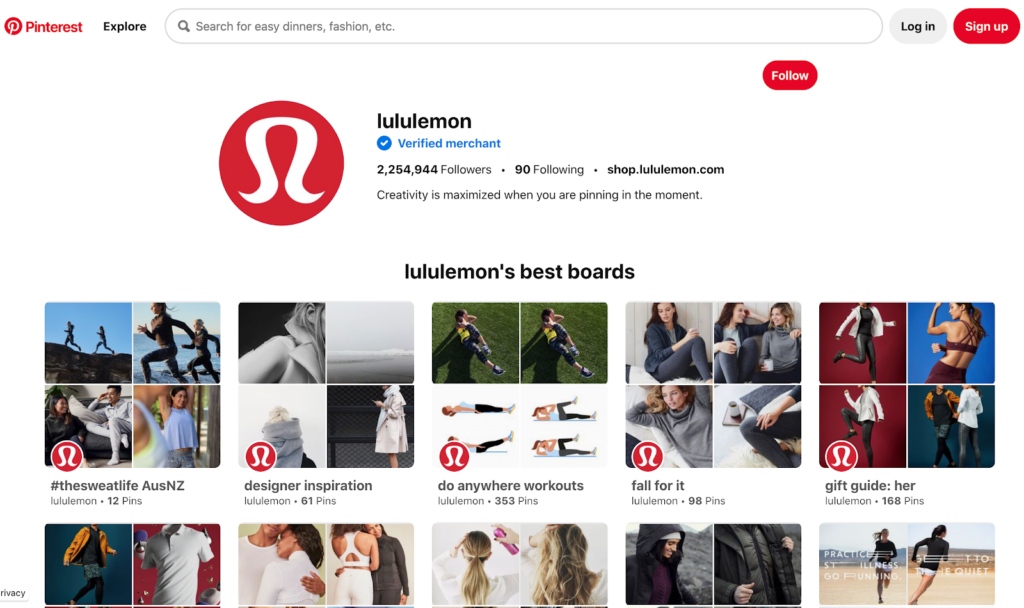
While their Pinterest displays their products being used in a more aesthetic way that relates to their main offering; athletic wear.
Nike is another brand that fully utilizes social media to optimize their brand value. With over 100 million instagram followers, 35 million Facebook followers and 1.5 million YouTube subscribers, Nike is truly a king of Social media today. Other than Nikes well-known and admirable products, Nike’s social media platforms give users insight on athletes, sports teams, current trends and fitness. Their social media serves as a source of entertainment rather than only promoting their products. Nike creates content that anyone can interact with, even having separate pages for different audiences; having Nike, nikewomen and nikesportswear profiles on instagram. All-in-all, Nike’s strategy goes above and beyond in providing content that can catch the attention of anyone browsing through social media, while also effectively communicating their core values.
Nike’s youtube channel presents entertaining and inspirational videos of athletes. For example, a series called Athlete’s cookbook where an athlete talks about their life in the kitchen alongside a chef discussing foods and meals.

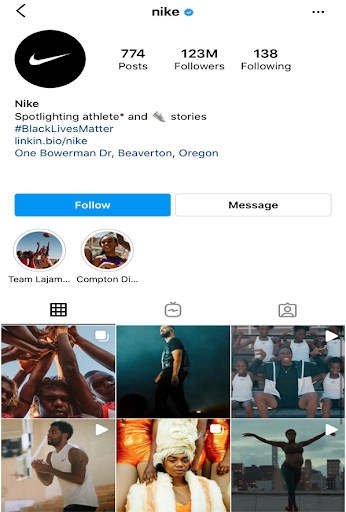
Their instagram features high-quality photos and short videos of athletes with captions that tell a story. Bringing awareness to less common sports such as ”Bush Footy”, a form of football practiced among Indigenious Australians in remote towns. Nike is also up to date with the latest trends going in the world and shares their insight on these movements via Instagram.
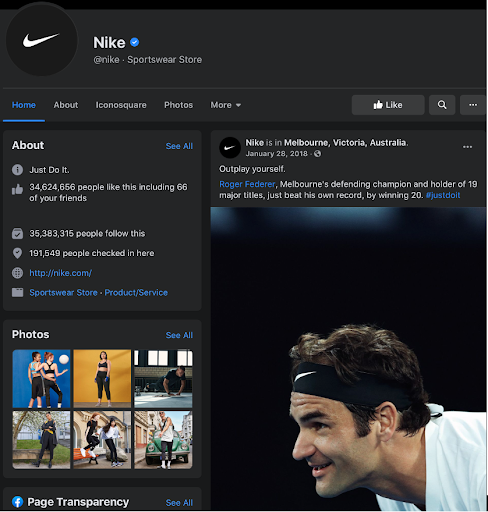
Nike’s Facebook page on the other hand serves as a sports news-like platform; showcasing athletes and their accomplishments such as new world records or titles won.
Both Lululemon and Nike have a similar product offering; being athletic apparel. However, you can see how each brand tells a different story through their content on social media. Lululemon focuses on providing a platform beneficial to lifestyle and wellness while Nike establishes a more entertaining and sports-oriented platform. Think about what kind of story you will tell about your brand on social media.
3. Empowering User Generated Content
User generated Content is content provided by customers regarding your brand; being a review, a video, a social media post or anything shared online by a customer. When online shopping, people often second-guess buying a product because they aren’t able to try, feel, smell or experience it first-hand. Customers who have purchased that product however, can serve as a resource for those doubtful shoppers. Your customers hold a lot of value; they have already purchased your product, experienced it, and now have a sense of insight on it. They can answer so many unanswered questions shoppers may have regarding your product and can also provide additional personal inferences. By empowering user generated content, you’re essentially utilizing your customers to optimize your product while also helping your shoppers. User generated content is honest and trustworthy, being resourceful for shoppers and making them feel more confident and satisfied when purchasing a product online.
User Generated Content Examples:
As stated previously, Social Media is a popular activity nowadays. Customers are sharing and commenting on your products and services online via social media platforms in the form of videos, photos and text out of your control. User generated content is content you don’t have to create, being basically free quality content for your brand. Your brand can have zero affiliation with a person, and that person has the ability to create a movement out of your product by posting and sharing it. Although your brand has no say in who or what people are posting, you do have the ability to empower and optimize user generated content. You can encourage your customers to create content on social media through hashtags and interact with those who are tagging your brand in their posts. You can also optimize already made content that people have posted about your brand by acknowledging and reposting it to your social media, of course with their permission.
Did you hear about the Tiktok famous Aerie crossover leggings? A girl posted a Tiktok wearing a pair of leggings from Aerie commenting on how amazing they made her waist look. This Tiktok went viral with over 6 million views, influencing thousands of girls to purchase these leggings and post Tiktoks wearing them. Currently Aerie is not only sold out of these leggings everywhere but also has over 43 million hashtags on Tiktok from the movement created by this customer and these leggings. All this hype was created by one Aerie customer who posted a single Tiktok video; a great example that illustrates that ability of user generated content.




Aerie had no affiliation with this user or the post, however, they are embarking on this crossover legging movement. On Aerie’s Twitter profile you can witness how they are empowering user generated content by retweeting users’ who are tweeting about their products, and emphasizing lots of attention on these crossover leggings.


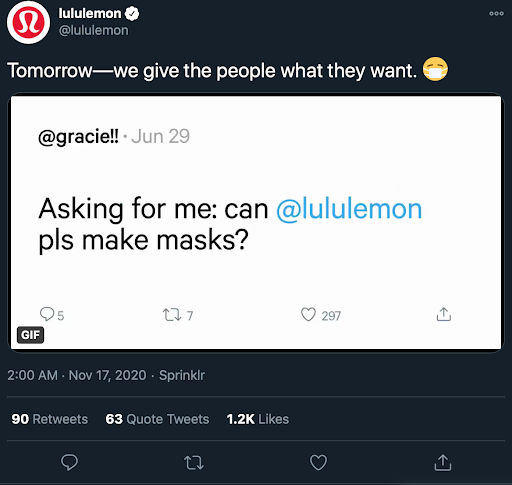
In this Tweet, you can easily identify how Lululemon empowered user generated content. Many people mentioned and tagged Lululemon in their tweets, begging for them to drop face masks during the coronavirus pandemic. Lululemon responded by using these tweets to create a gif they tweeted announcing the release of their face masks.
Another extremely useful yet simple source of user generated content are Reviews and ratings. Since customers can’t fully experience a product in e-commerce stores reviews/ratings are the second best they can get to a personal experience. Shoppers become reliant on reviews/ratings to gain an unbiased personal understanding and opinion on that product rather than sales-driven biased content that most brands will convey. Since reviews and ratings are so raw and straightforward, being both positive and negative, they have the ability to make or break a person’s decision to purchase a product while online shopping. Not only do reviews/ratings help shoppers, but they also help your brand in identifying the pros/cons of your products and where there is room for improvement. Acknowledging your customers reviews/ratings is also a great way of showing dedication to them; letting them know you’re there and that their insight is important to you.
On Patagonia’s ecommerce store, you can see how they provide a review system that goes beyond just reviews and ratings, by also asking reviewers specific personal details that can be beneficial to online shoppers who are considering buying that product. This review feature can help shoppers determine what size to purchase, if the product will meet their usage needs and ultimately influence their decision to buy it.
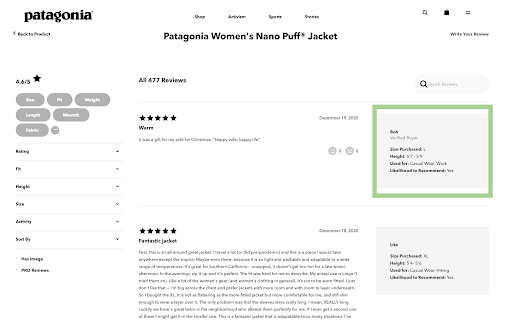
Yotpo is an eCommerce marketing platform with extremely advanced solutions. Their platform offers state-of-the-art user-generated content integrations to optimize your brand’s ecommerce store and create an engaging experience for shoppers. One of Yotpo’s integrations are reviews; extracting reviews and customer content to generate sales. In addition to reviews and ratings, the Yotpo platform enables an Instagram like experience; allowing customers to share videos and photos, combining these beautiful sources of user content and displaying them in a gallery-like format to boost engagement and product discovery. Partnering with several world-class brands including Patagonia, shown above, Yotpo succeeds in utilizing user-generated-content to create an engaging and satisfying e-commerce shopping journey.


As there are an immense magnitude of ways to create content, we believe these 3 simple content must-haves hold the keys to boosting customer engagement and satisfaction. Whether you integrate product demos, social media, or user generated content into your ecommerce store, you’re establishing a sense of interaction with your customers. These forms of content not only showcase your products in an engaging way but also tell a story about your brand’s values.
Identifying what type of content you are willing and able to create is the first step in getting started. The next step will be understanding what type of content is most relatable to your target audience. Be mindful of how there are several different types of content and each serves its own distinct purpose. Not every form of content may be applicable for your brand’s offering. Don’t try to force a specific piece of content that might not be suitable on a certain platform. For example, don’t post an informative detailed product demonstration on TikTok, as it won’t be sufficient on that platform. Consider how, what and where your brand’s content will be most compelling and significant.
Thank you for reading Dialogues first blog post, we are honored and determined to keep you updated on the world of ecommerce. Feel free to ask any questions, share insight and let us know if we missed anything in the comments below! Enter your email to subscribe and hear more from Dialogue.

Sign up for our Newsletter
Recent Posts


